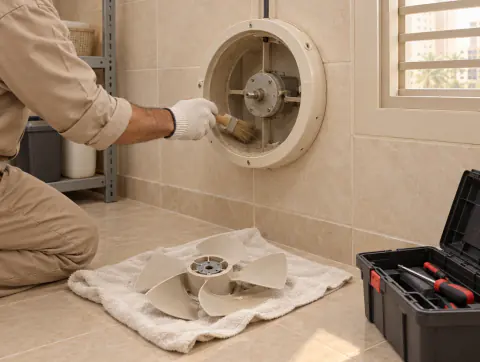
Grease builds up on your extractor-fan blades
The extractor fan in your kitchen or bathroom pulls dirty air through every day, and with it grease particles and steam that stick to the blades, the grille and the duct wall behind. As the layer thickens, the blades labour, the airflow weakens, and the noise or the motor heat can rise. In the hot summers, grease dries and hardens on metal faster than in humid climates, so the build-up can feel sudden.
We start by hearing what you notice in your fan, then we clean the blades, the grille, the inner housing and the reachable section of the outlet duct. Call or message us on WhatsApp, tell us your district and where the fan is in your home, and we agree a time.
- Blades and grille
- Outlet duct
- Inner housing
What does extractor-fan cleaning cover?
These are the parts the cleaning goes through in an extractor fan, depending on its condition and what you notice in it.
- The grille cover
We remove the grille and soak it where needed to release hardened grease, as it is the first part to catch fat and the first to slow airflow.
- The fan blades
Layers of grease gather on each blade and upset the balance of rotation, which causes vibration and noise. We remove the layers with care so the blades stay straight.
- The inner housing
Dirt sticks to the housing walls around the blades, narrowing the air passage. We wipe those walls with what suits the material, whether plastic or metal.
- The duct inlet
Thick grease collects at the duct inlet behind the fan where it is reachable, and clearing it removes a direct obstruction to the airflow.
- The motor seat and mounts
We wipe dust and grease from the motor mounts and the surfaces around it, because build-up there raises the running temperature over time.
- The outer frame and surrounding wall
We clean the frame set into the wall and any stained surface around it, as grease marks around the fan opening show clearly and collect more dust.
How do we start?
Three simple steps, and we take care of the rest.
Call or message us on WhatsApp
Tell us the service you need and your district.
Tell us what you notice
Say whether the fan is slower, noisier or giving off a smell, which district you are in, and where in the home the fan is fitted.
We agree a time
We settle on a time that suits you, and you clear the surface below the fan and move nearby utensils or items out of the way before we start.
We work, then you check
We clean the parts and reassemble the fan, then run it with you to check the sound is normal and the airflow has returned to how it should be.
A service that comes to your door
- We come to youOur team arrives at your home with its equipment.
- One callCall or message us on WhatsApp and we arrange the rest.
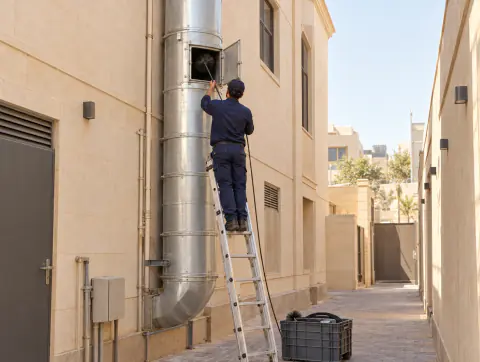
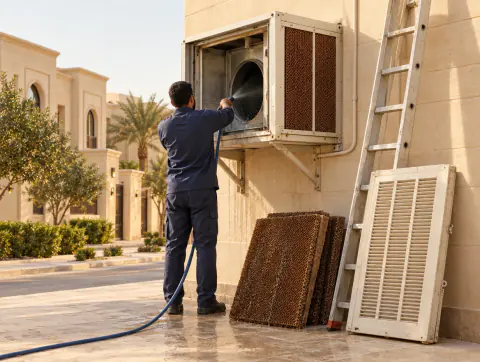
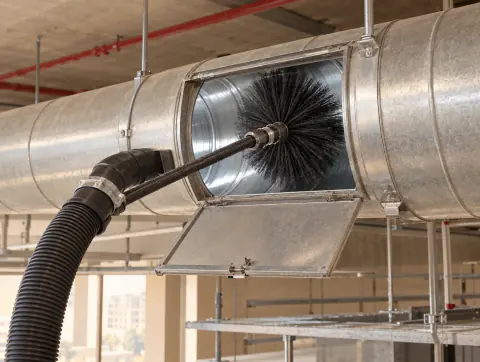
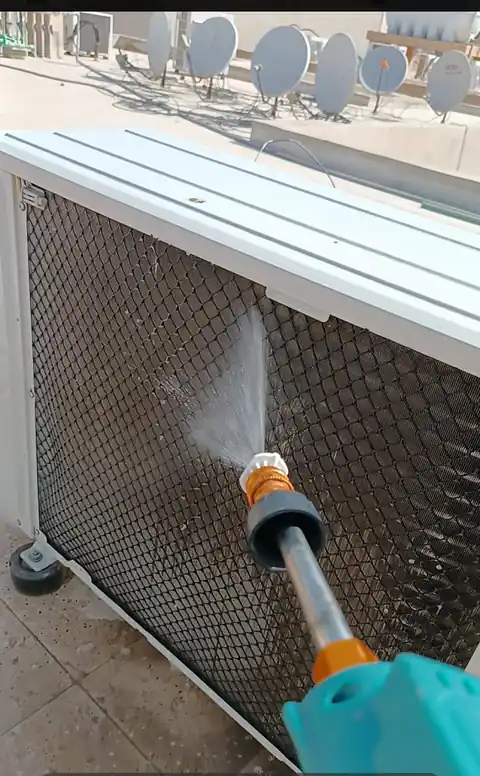
- Air services with one teamWe also clean restaurant chimneys, desert cooler ducts and ACs.
- Describe the fan in your own wordsA call or a WhatsApp message is enough to explain what you notice in your extractor fan.
One worry is that the fan will need to be pulled out completely or the power left off for a long stretch. Cleaning starts with the parts that come off and go back on, and when you call we agree the preparation details so the picture is clear before we arrive.
Photos of our work




























What our customers say
١٠/١٠ ما شاء الله
خدمة ممتاز وسعر مناسب وشغل مية مية انصح فيهم 👍
يعطيكم العافية على الشغل النظيف
Questions about Extractor-fan cleaning
How do I know my extractor fan needs cleaning?
Signs include louder sound or vibration when it runs, cooking smells staying in the kitchen longer than they used to, and a brown grease layer on the grille or the surrounding wall. Any of those on their own is reason enough to have it cleaned.
Does a bathroom extractor fan differ from a kitchen fan when cleaning?
Yes. A kitchen fan collects cooking grease and needs degreasing, while a bathroom fan tends to gather dust and moisture residue on its blades and housing without much grease. That is why we ask where the fan is when you call.
Do I need to cut the power before the fan is cleaned?
Isolating the power to the fan circuit is a necessary step before any part is removed, because the blades spin fast and could be started accidentally. We tell you what to prepare when we agree the time, and it does not take long.
What do I check after the fan is cleaned?
Run the fan and listen: it should be quieter and smoother. Then feel the airflow at the grille, and check the surrounding wall and nearby surfaces are clean. If you notice unusual vibration after reassembly, let us know straight away.
What changes how much work the extractor-fan cleaning involves?
The effort involved depends on the fan size and location, how much of the duct behind it is reachable, how long it has been since the last clean, and what it draws in daily. A kitchen fan that runs for long periods over high heat takes more work than a bathroom fan.
Related services
Have a look at services close to this one.