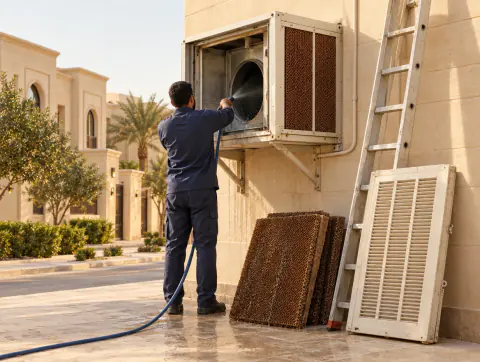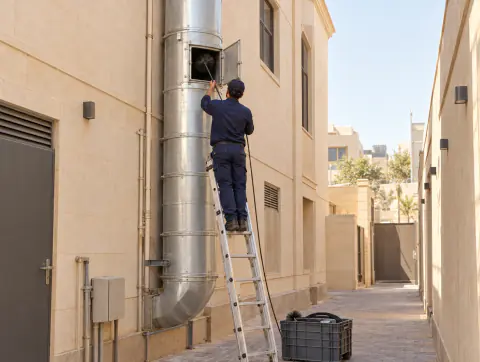
Grease builds up inside the exhaust duct
A restaurant chimney draws oil vapour and grease particles from the stove every day, and those particles stick to the metal duct walls, to the hood grease filters and to the blades of the exhaust fan. The longer it goes, the thicker the layer and the harder it is to shift, and it restricts airflow while leaving a fixed oil smell throughout the kitchen.
Call or message us on WhatsApp, tell us your district, the length of the exhaust duct and the number of hoods, and we agree a time that fits your kitchen schedule. We clean the filters, the duct walls and the exhaust fan blades, and check the airflow when the work is done.
- Hood and grease filters
- Duct wall surfaces
- Exhaust fan
What does restaurant chimney cleaning cover?
These are the parts the cleaning covers, depending on the condition of the chimney, the duct length and the number of hoods.
- Hood grease filters
We remove the metal filters and strip off the hardened grease, because a clogged filter pushes back against the airflow and puts pressure on the rest of the duct.
- Inner duct walls
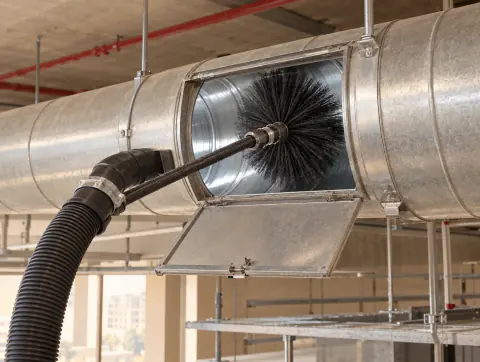
We scrape and wipe the inner metal duct walls clean of grease, since a thick fat layer narrows the air passage and becomes harder to remove the older it gets.
- Exhaust fan blades
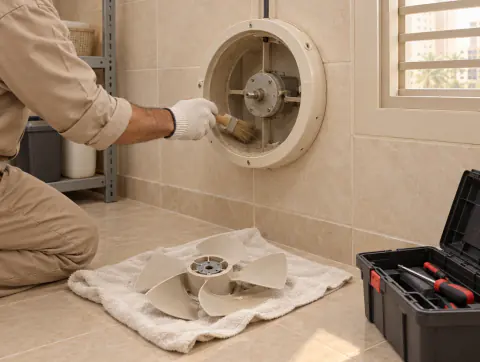
Grease clings to the fan blades and weighs them down, reducing the suction, and we remove the build-up to restore the full rotation of the blades.
- Hood outer casing
We wipe the outer hood surfaces clean of grease spots and soot, as these are the first thing anyone working in the kitchen sees.
- Top exhaust opening
We check the discharge opening in the ceiling or wall and clear any build-up that is blocking hot air from leaving the building.
- Joints and bends
Grease collects at the bends and joints of the duct more than on the straight sections, and we pay particular attention to these because they are the hardest to reach.
How do we start?
Three simple steps, and we take care of the rest.
Call or message us on WhatsApp
Tell us the service you need and your district.
Tell us what you have
Tell us the number of hoods, your estimate of the duct length, and the district the restaurant is in, and mention when the chimney was last cleaned if you know.
We agree a time
We agree a time that fits around your kitchen hours, and you make sure we can reach both the hood and the top exhaust opening.
We clean and check
We clean the filters, inner walls, fan blades and joints, then run the extraction with you to confirm the airflow has returned.
A service that comes to your door
- We come to youOur team arrives at your home with its equipment.
- One callCall or message us on WhatsApp and we arrange the rest.
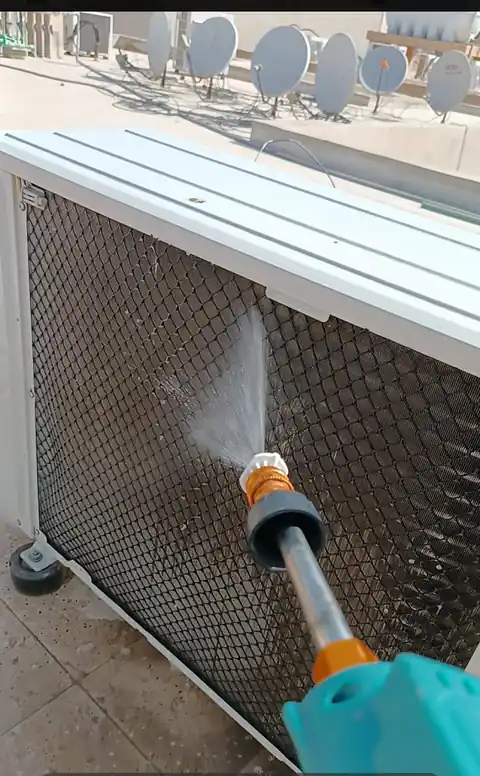
- Full kitchen air cleaning in one placeWe clean restaurant chimneys, extractor fans, desert cooler ducts and AC units too.
- Describe the chimney in your own wordsA call or a WhatsApp message is enough to describe the chimney and agree a time with us.
One worry is that cleaning will shut the kitchen down at the wrong time. We agree the timing with you in advance to fit around your quieter hours, and we hand the chimney back clean without disrupting the kitchen any more than needed. Leave the details to us.
Photos of our work




























What our customers say
يعطيكم العافية على الشغل النظيف
ماشاء الله خدمة وسرعة إنجاز ونظافة
جزاهم الله كل خيرماشاء الله تبارك الله شغل محترف واخلاق عاليه والتزام في المواعيد الله يبارك لهم
Questions about Restaurant chimney cleaning
How do I know the restaurant chimney needs cleaning?
Signs include weak extraction during cooking, an oil smell that stays in the kitchen after ventilation, and a visible grease layer inside the hood opening. If the chimney runs every day for long hours, a check at regular intervals is a sensible step even when no obvious signs have appeared.
What changes the size of the chimney cleaning job?
The job size depends on the duct length, the number of hoods, the number of bends in the run, and how thick and old the grease layer is. A chimney cleaned at regular intervals takes far less work than one that has built up grease over a long time. We ask you about all of these when you call.
Do I need to prepare anything before the cleaning?
Yes, it helps to have the stove off long enough before the start to let it cool, and to make sure we can reach the hood and the exhaust opening in the ceiling or outer wall. If the duct runs through a closed area or a suspended ceiling, mention that when we agree the time so we can prepare.
What should I check after the cleaning is done?
Run the extraction and notice how strongly air comes out of the exhaust opening, and check that the oil smell has dropped or gone after you run the stove. Look at the filters after the first cooking session: a clean filter picks up grease more slowly and stays easy to pull out.
Is cleaning a restaurant chimney different from a home kitchen chimney?
Yes, the difference is significant. A restaurant chimney runs for longer hours and draws much larger volumes of oil vapour and smoke, so grease builds up faster and forms hardened layers on the duct walls. A restaurant duct is usually longer, wider and has more bends than a home one, which means reaching some sections of it takes different preparation.
Related services
Have a look at services close to this one.