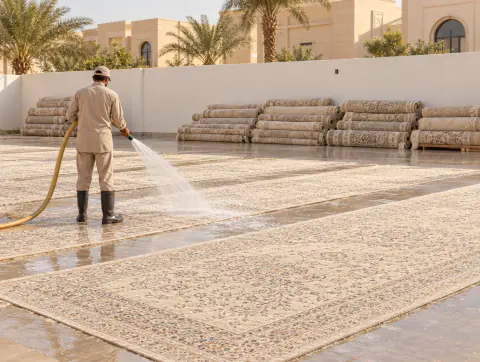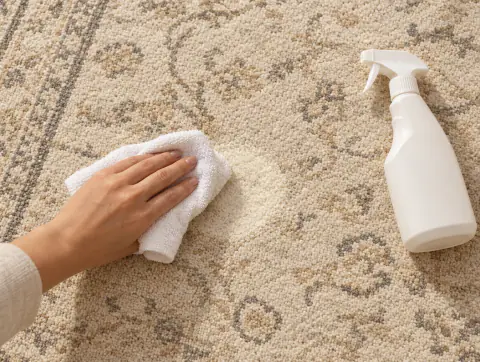
A stain does not fade by itself
When coffee or juice lands on a carpet, it does not stay on the surface. Carpet fibres absorb liquid fast and trap it near the base. The dry air and high summer heat dry the stain quickly and fix it in place, making it much harder to lift with vacuuming or water alone.
We start by asking you about the stain type, when it happened and what kind of carpet it is, then we agree a convenient time. After the work, check the carpet in good light to confirm the mark has gone and the fibres are dry. Call or message us on WhatsApp, tell us your district, and we take care of the rest.
- Coffee and tea stains
- Grease and food stains
- Child and pet marks
What does carpet stain removal cover?
These are the stages carpet stain removal goes through, and they vary with the stain type, its age and the carpet fibres.
- Stain assessment
We identify whether the stain is greasy, protein-based or acidic, because tea, cooking fat and urine each respond to a different approach, and using the wrong one can push the mark deeper.
- Fibre check
We check the fibre type, whether wool, silk or synthetic, because natural fibres are sensitive to excess moisture and silk fibres need a light touch to avoid distortion.
- Stain treatment
We work on the stain from the edge inward to stop it spreading, which protects the threads around the mark from absorbing more liquid.
- Base layer
An old stain reaches the lower part of the fibre threads. We make sure the treatment reaches that depth and does not only address what is visible on the surface.
- Colour check
We check that the treatment has not affected the colour of the threads around the stain, as some dyed carpets can bleed when wet, which varies from one carpet to another.
- Drying the area
We dry the treated area thoroughly, because moisture left in the fibres attracts dust and leaves a ring mark that appears once the carpet dries.
How do we start?
Three simple steps, and we take care of the rest.
Call or message us on WhatsApp
Tell us the service you need and your district.
Tell us about the stain
Tell us what caused the stain, roughly when it happened, whether the carpet is wool or synthetic, and which district you are in.
We agree a time
We settle a time that suits you. Before we arrive, do not rub the stain or put salt or household cleaners on it, as that can set it further into the fibres.
We treat the stain
We treat the stain and dry the area, then show you the result so you can check it yourself in good light before we finish.
A service that comes to your door
- We come to youOur team arrives at your home with its equipment.
- One callCall or message us on WhatsApp and we arrange the rest.
- Carpets and upholstery, one teamWe clean Persian carpets, hand-made carpets, mosque carpets, sofas, wall-to-wall carpet, curtains and mattresses, all with the same team.
- Describe it in your own wordsA call or a WhatsApp message is enough to describe the stain and the condition of your carpet.
One worry is that treatment might affect the colour or damage the fibres. That risk depends largely on identifying the stain type and the fibre type before starting, which is exactly what we ask you about when we agree the appointment. Tell us what you know about your carpet, and leave the work to us.
Photos of our work




























What our customers say
خدمتهم ممتازه وسريعين في قبول الطلب كلمتهم في نفس اليوم بعدها ب ساعه وهم عندي ماشاء الله
ثاني تجربة لي معهم ،، يعطيهم العافية
ممتازين جداً وسريعين 👍🏻جودة عمل بسعر معقول ماشاءالله الله يوفقكم
Questions about Carpet stain removal
Can an old dried stain that has been there a while be removed?
An old stain is harder than a fresh one because the liquid has dried and its solid residue has bonded to the base of the fibres. The longer it has been there, the harder full removal becomes, especially with protein stains such as blood, milk or egg. Tell us how old the stain is and what the carpet is made of when you call, and we can assess what is possible.
Should I rub the stain before you arrive to reduce it?
Do not rub the stain. Rubbing pushes the liquid deeper into the fibres and spreads the affected area. If the stain is fresh, blot the surface gently with a dry cloth, working from the edge inward, then leave it until we arrive.
Does the carpet type change how the stain is treated?
Yes, considerably. A wool carpet absorbs moisture and needs careful drying to prevent fibre distortion. Silk is very sensitive to pressure and wetness, while synthetic fibres are more tolerant. That is why we ask about your carpet type before we start.
What should I prepare before the stain removal appointment?
Move light furniture away from the stain area, and open a window or run the AC so the carpet dries quickly after treatment. If the stain is in a corridor or a used room, try to keep foot traffic off the area until it is completely dry.
A ring mark appeared around the cleaned area afterwards, what caused it?
This is called a wicking ring, and it happens when moisture remains in the fibres and draws fine dust from the air, leaving it at the edge of the treated area as it dries. The usual cause is insufficient drying after treatment, which is why we treat drying as a step in the work rather than leaving it to chance.
Related services
Have a look at services close to this one.