Hospital contamination is not visible to the eye
Hospital surfaces receive heavy traffic every day: patient beds, door handles, drip stands, nurses' stations and waiting-room chairs. That repeated contact builds up contamination that routine procedures do not remove, especially in poorly ventilated areas or spots that are hard to reach daily.
Call or message us on WhatsApp and tell us the nature of your facility, its size and which areas need sanitizing, and we will agree a time that fits your operational schedule without prolonged disruption to your service.
- Floors and corridors
- Surfaces and equipment
- Wards and isolation areas
What does hospital sanitizing cover?
These are the areas and surfaces the sanitizing covers in a hospital, according to the layout and condition of the facility.
- Patient beds and fittings
The metal and plastic surfaces of beds, their side rails and lift arms carry a high load from repeated contact with patients and staff, and each is treated directly.
- Nursing stations and work surfaces
Nursing desks, keyboards and fixed devices are touched by many hands across every shift and need sanitizing that reaches edges and recesses, not just flat surfaces.
- Door handles and shared surfaces
Door handles, lift buttons, drip stands and waiting-room chairs are the most frequently touched points in the facility, and they are the starting point because of their high contact rate.
- Corridor and room floors
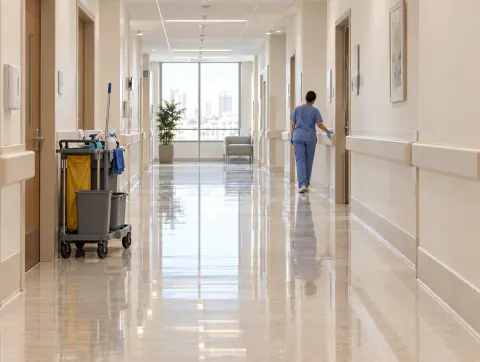
Hospital floors take constant traffic from bed wheels, feet and trolleys, and the sanitizing reaches the edges and corners that routine mopping misses.
- Bathrooms and hand-wash points
Sinks, toilets and hand-wash stations have high humidity and heavy microbial build-up, and they are sanitized with particular attention to taps and all contact points.
- Isolation areas and private rooms
Isolation rooms need sanitizing that covers every surface from walls to fixed furniture, and the exact requirements are agreed when you describe the room's use and current condition to us.
How do we start?
Three simple steps, and we take care of the rest.
Call or message us on WhatsApp
Tell us the service you need and your district.
Describe the facility
Tell us the hospital's size, which areas need sanitizing and which surfaces concern you, and the district where the facility is located.
We agree a time and you prepare
We fix a time that fits your facility's schedule, and you make sure the designated areas are clear of patients and staff during the sanitizing period.
We sanitize and you check after
We work through the areas as agreed, and once done you check that the targeted surfaces are dry and that rooms have been aired before returning to use.
A service that comes to your door
- We come to youOur team arrives at your home with its equipment.
- One callCall or message us on WhatsApp and we arrange the rest.
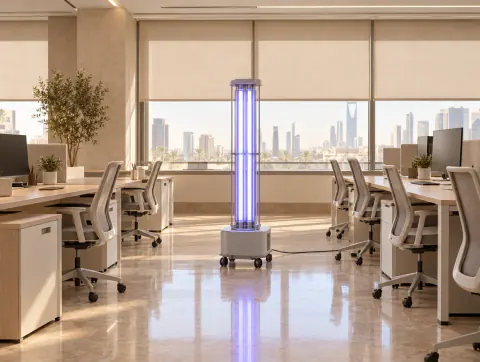
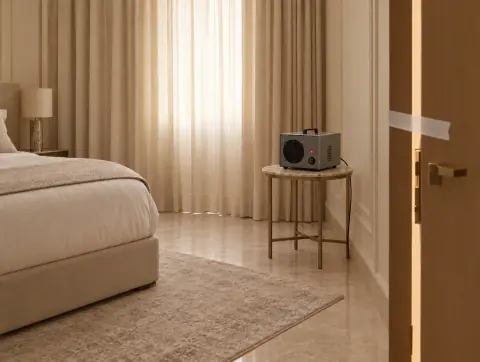
- The same team for all your sanitizing needsWe also handle clinic sanitizing, operating-theatre sanitizing, school sanitizing, restaurant sanitizing, spray sanitizing, UV sanitizing and ozone sanitizing.
- Just describe the placeCall or send a WhatsApp message and tell us about the hospital and the areas you want sanitized.
One worry is that the facility will be disrupted or that entire sections will need to close for a long time. We agree the timing and areas with you in advance so the sanitizing runs at a time that fits your operational schedule, and we take care of the rest.
Photos of our work




























What our customers say
ممتازين مره مره مره ومؤدبين
افضل شركه تنظيف منازل وخزانات بارك الله فيكم
ممتازين والشباب متعاونين
Questions about Hospital sanitizing
How do I know the hospital needs sanitizing rather than just ordinary cleaning?
Cleaning removes visible dirt, but hospital surfaces take a daily microbial load from patients, staff and visitors. When there is an infectious case, cross-patient transfer or a ward reopening after a closure, sanitizing is the right step, not cleaning alone.
Which surfaces need special preparation before the team arrives?
It helps to clear used linen and covers from beds, remove exposed medications and supplies from nursing surfaces, and move portable devices out of the target area. Anything that is fixed or difficult to move is agreed when you call.
Does sanitizing an intensive care unit differ from other wards?
Yes, intensive care surfaces include fixed equipment, cabling and sensitive monitoring devices that need treatment suited to their presence. That is why we ask about the ward's details when you call, so we prepare the right approach for each surface and device.
Can a single ward be sanitized without closing the whole hospital?
That is possible in most cases, and it depends on the ward's size, its location and how it connects to shared corridors. We agree the area boundaries and timing when you describe the internal layout of the facility to us.
What do I check after hospital sanitizing is finished?
Check that all treated surfaces are dry before replacing supplies or allowing patients back in. Look at corners and horizontal surfaces such as nursing shelves and tables to confirm they were covered, and raise any observation with the team before they leave.
Related services
Have a look at services close to this one.