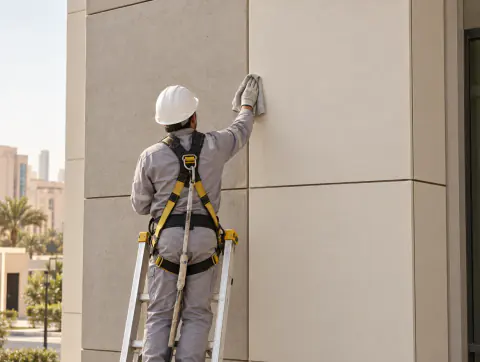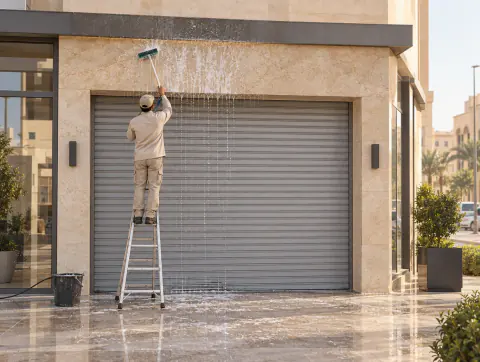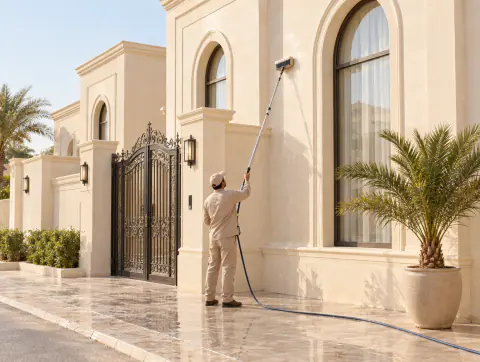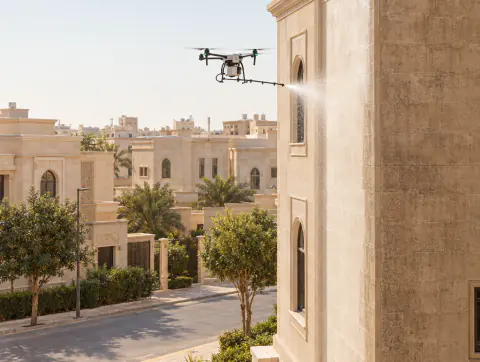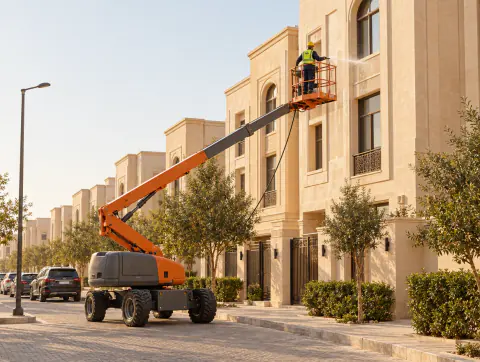
Upper floors are out of reach a lift gets there
Facades that rise beyond the first floor cannot be properly cleaned by hand from inside the building or by leaning over the roof edge. Fine dust builds up on glass, cladding and stone on upper floors just as it does lower down, but dealing with it needs safe, controlled access matched to the height and the surface type of the building.
Tell us the type of facade, how many floors the building has, and which district it is in, and we agree a time and the details with you. Call or message us on WhatsApp, we listen to what you have noticed, and we arrange the next steps.
- Upper-floor access
- Glass and cladding surfaces
- Commercial and residential buildings
What does the work cover with facade cleaning lifts?
These are the elements the work goes through when a lift is used, depending on the facade type, the building height and the condition of the surfaces.
- Height and access assessment
Before cleaning starts, the building height and the lift path around the perimeter are checked, since ground obstacles such as walls, trees and parked vehicles affect how the lift is positioned.
- High glass surfaces
Glass on upper floors collects fine dust and rain-water marks, and it needs direct access from the lift to be wiped fully without leaving streaks.
- Cladding panels
Metal and composite cladding collects dust in the joints between panels, and those joints can only be cleaned from a position directly alongside them.
- Floor edges and balcony faces
Floor edges collect dust deposits and salt residue from the large day-to-night temperature difference, and treating them requires lateral access from the lift.
- Surface condition check
While working from the lift it is possible to notice cracks, loose panels or eroded edges at close range, details that are hard to see from the ground.
- Final clean of lower edges
When each upper section is done, the lower edges next to it are cleaned to stop dirt from above running down onto the surfaces already cleaned.
How do we start?
Three simple steps, and we take care of the rest.
Call or message us on WhatsApp
Tell us the service you need and your district.
Tell us about your building
Tell us the building height, number of floors, facade type and what you can see on it, and which district the building is in.
We agree a time and what to prepare
We settle on a time that suits you, and you make sure the space around the base of the building is clear of vehicles and obstacles on the day.
We start cleaning from the top
We start from the top of the facade and work down section by section; when we finish, check the surfaces from the ground in daylight to see the result.
A service that comes to your door
- We come to youOur team arrives at your home with its equipment.
- One callCall or message us on WhatsApp and we arrange the rest.
- All facade types with one teamWe clean glass, stone and cladding facades, shopfronts, villa facades, and also drone facade cleaning.
- Describing what you see is enoughCall or send a WhatsApp message describing the facade condition and the building height, and we arrange the rest.
One worry people have when booking this service is that the building will be disrupted or entrances blocked while the work goes on. The lift operates from outside, with no need to evacuate floors or cut power, and we work through the practical details with you in advance so there are no surprises.
Photos of our work




























What our customers say
ثاني تجربة لي معهم ،، يعطيهم العافية
ممتازين جداً وسريعين 👍🏻ماشاء الله تبارك الرحمن علي الشغل إخلاص وامانه
يعطيكم العافية على الشغل النظيف
Questions about Facade cleaning lifts
When does cleaning a facade actually need a lift?
A lift becomes necessary when the facade is at a height that cannot safely be reached by wiping from inside or by hanging over the roof edge. Multi-storey commercial buildings and residential blocks with glass or cladding facades most often need a lift; shorter villas may be served by other access methods, which are agreed when you call.
Do I need permits or approvals before a lift operates in my district?
Operating a lift on a public road or in the area around a building may require prior coordination with the relevant local authority, depending on the building's location and the street type. Tell us the location and district when you get in touch, and we clarify what you need to arrange on your side before the appointment.
What affects how the lift moves around the building?
The main factors are the width of the pavements and passages around the building, the presence of walls, barriers, trees or adjacent parking, and the ground surface under the lift's wheels. That is why we ask you to describe the building perimeter when you call, so the route can be planned before the day.
What should I prepare around the building before the lift arrives?
The most important step is to move vehicles away from the areas alongside the facade to be cleaned, and to let building residents or staff know in advance if entrances will be temporarily affected. The specifics for your building are agreed with you when the appointment is set.
How do I check the cleaning quality after the lift has gone?
Check the facade from the ground in natural daylight and look for any areas that still carry marks or streaks compared with the sections next to them. If you notice something unsatisfactory, tell us as soon as the work is done and before the team leaves, as it is far simpler to address a point while the team is still on site.
Related services
Have a look at services close to this one.