Your clinic surfaces hold what wiping alone does not remove
A clinic is a place where hands move from door handle to reception desk to examination couch all day long. Hard surfaces such as stainless steel, Formica and ceramic tile accumulate what each contact leaves behind, and dust settles into corners and onto equipment between visits. Cleaning removes what you can see; sanitising treats what remains after that.
We start by listening: tell us the size of your clinic, its rooms and the time that suits you after closing or on a rest day. Call or message us on WhatsApp, give us your district, and we agree a time that works around your schedule.
- Examination surfaces
- Shared waiting areas
- Toilets and washrooms
What does clinic sanitizing cover?
These are the surfaces and areas the sanitising work goes through, depending on the clinic's specialty, its size and what you notice in it.
- Examination couch and desk
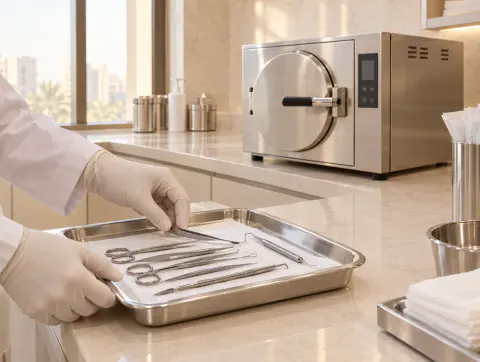
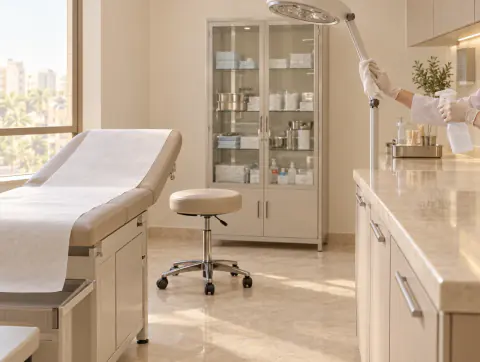
The examination couch is one of the most-touched surfaces in the clinic, and its vinyl or rubber cover needs a different approach from hard surfaces; we sanitise it along with the instrument tray beside it.
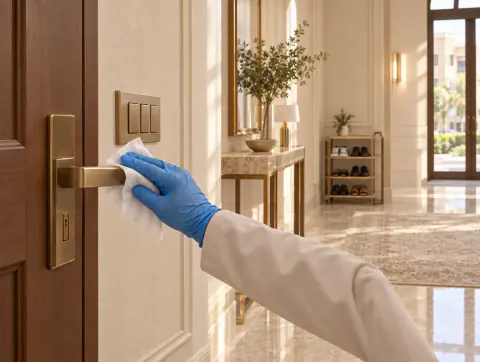
- Door handles and light switches
These points are touched by everyone moving between rooms; they are among the surfaces most often missed in routine cleaning because they are small, and we treat every one of them in each room and washroom.
- Waiting area and seating
Patients sit in the waiting area for stretches of time, and chairs with plastic or upholstered surfaces need treatment suited to their material so colour and fabric are not affected.
- Reception desk and shared devices
The keyboard, call device and the pen patients use to sign forms are all high-contact points at the front desk, which every visitor passes through; we sanitise them along with the desk surface.
- Toilets and drain areas
The clinic toilet is used by a varied flow of visitors and staff, and the area around the basin drain and the floor collect moisture in the warm climate; we treat them as a separate area.
- Floors and lower wall surfaces
The tile or vinyl flooring in clinics holds the dust that enters with visitors, and the lower metre of wall carries what shoulders, bags and trolleys brush against; we include both in the sanitising work.
How do we start?
Three simple steps, and we take care of the rest.
Call or message us on WhatsApp
Tell us the service you need and your district.
Tell us about your clinic
Tell us how many rooms the clinic has, its specialty, any surfaces or areas you want to focus on, and which district it is in.
We agree a time and you prepare
We pick a time with you after closing or on a rest day, and you clear surfaces of instruments and paper files before we arrive.
We sanitise and you check afterwards
We sanitise the surfaces as agreed, then you check the main contact points such as handles and the examination couch before the clinic opens to patients.
A service that comes to your door
- We come to youOur team arrives at your home with its equipment.
- One callCall or message us on WhatsApp and we arrange the rest.
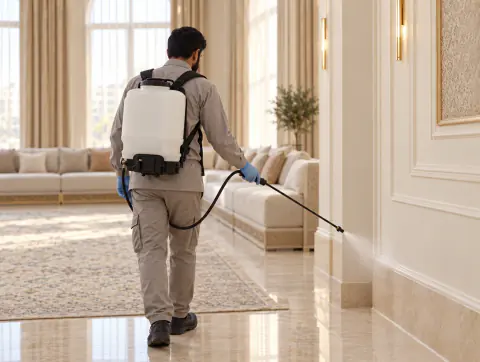
- All sanitising services with one teamWe sanitise homes, hospitals, schools, restaurants and operating theatres, and also handle home air sanitising and pest control.
- Describe your clinic in your own wordsA call or a WhatsApp message is enough to tell us the clinic's size and what you need, and we agree the rest.
One worry is that sanitising might affect sensitive equipment or materials in the clinic. Every clinic's surfaces differ depending on its specialty, so we hear from you first about what is there before we begin, and we agree on the right approach for each area. Leave the details to us.
Photos of our work




























What our customers say
ماشاء الله تبارك الله شغل محترف واخلاق عاليه والتزام في المواعيد الله يبارك لهم
very good experience with this company.
Highly Recommended for underground and above ground water tank cleanlinessافضل شركة تنظيف
Questions about Clinic sanitizing
How do I know my clinic needs sanitising rather than routine cleaning?
If your clinic receives patients daily and shared surfaces are reused many times without specialist treatment, routine cleaning removes only visible dirt. Sanitising treats hard surfaces such as handles, the examination couch and damp areas in a way that goes beyond regular wiping.
Does the clinic need to be fully closed during sanitising?
Sanitising is best done after closing or on a rest day so surfaces are clear and accessible. If the clinic runs in two shifts, we agree with you on which section and which time when you call.
What should I prepare before the team arrives to sanitise the clinic?
Clear examination surfaces and the desk of instruments and paper files, and make sure washrooms are empty and ready for treatment. Also let us know if there are any electronic devices or surfaces that need a heads-up before we start.
Does sanitising the examination room differ from the waiting area?
Yes, the examination room contains the couch and instruments with varied surfaces such as vinyl, Formica and metal, and these need a different approach from the waiting area's plastic or upholstered chairs. We ask you about each room when you call so we can prepare the right way.
What changes the scope of work in clinic sanitising?
The clinic's floor area and number of rooms come first, then its specialty, because some specialties have surfaces or devices that need prior coordination. The condition of the surfaces and the level of daily use also matter. We discuss all of this with you when you call.
Related services
Have a look at services close to this one.