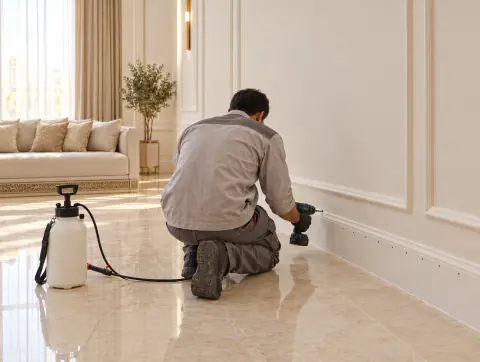
Termites work out of sight
Termites do not appear on the surface until damage is already done underneath. They build their colonies in the soil beneath foundations or inside timber, tunnelling through the dark and away from light. By the time you see the damage with the naked eye, the work has usually been going on for a long time.
The hot, dry climate suits particular termite species that seek out moist soil near foundations or around water leaks. Many new homes and buildings in the city have been affected because the ground was not treated before the slab was poured. Whether you need Termite (arda) control for an existing building or pre-construction termite treatment for a site still under construction, the approach differs and we discuss which applies when you call.
Describe what you have noticed, tell us your district and the type of building, and whether it is under construction or already complete. Call or message us on WhatsApp and we agree a time that works for you.
- Termite species
- Pre and post-construction
- Floors and ceilings
Choose the treatment that fits your situation
The right termite treatment depends on whether your building is still under construction or already finished, so read the line below to choose the service that fits.
How do we start?
Three simple steps, and we take care of the rest.
Call or message us on WhatsApp
Tell us the service you need and your district.
Describe what you see
Tell us what you have noticed, whether sticking doors, hollow wood, mud tubes, or a building under construction you want treated before it is finished, and which district you are in.
We agree a time and you prepare
We settle a time with you, and you clear any wooden cupboards or drawers near the affected area and provide access to floors and bases as needed.
We do the work and you check
We carry out the agreed treatment, then check the areas you pointed out, the timber, floors and corners, and let us know straight away if you notice anything new.
A service that comes to your door
- We come to youOur team arrives at your home with its equipment.
- One callCall or message us on WhatsApp and we arrange the rest.
- The same team for pest controlWe also handle ant control, bed bugs, cockroaches, rodents, mosquitoes and pigeon control.
- Just describe what you seeCall or send a WhatsApp message describing what you notice, and we take care of the rest.
One worry is finding more timber or floor damage after the work is done. Termites do not go away just because you spot them; correct treatment targets the soil and the routes they travel through. Describe what you see and we will work out the right type of treatment with you.
Photos of our work




























What our customers say
very good experience with this company.
Highly Recommended for underground and above ground water tank cleanlinessالشركه اكثر من رائعه نظافه تامه وتعامل ودقه في العمل والحرص على رضا العميل. يعطونك الصور قبل وبعد للتاكد. اوصي فيهم جدا .
سرعة في الخدمة والإنجاز
Questions about Termite control
How do I know if my home has termites?
The clearest signs are narrow mud tubes on walls or columns, timber that looks intact but sounds hollow when tapped, and wooden doors or windows that suddenly stick with no obvious moisture cause. You may also find small discarded wings near lights during the swarming season.
What is the difference between treating before and after construction?
Pre-construction termite spraying treats the soil and foundation before concrete is poured, forming a barrier in the ground itself. Post-construction treatment targets termite routes inside a finished structure, and the method varies with the location and extent of the infestation. The first service is available as a standalone option in the list below.
Can termites spread between flats in the same building?
Yes, termite control in a shared building is more complex than in a standalone home, because termites move through soil, columns and shared walls. Access to more than one floor or unit is often needed for an effective treatment, and that is one of the things we discuss when you call.
What should I clear or prepare before treatment?
Preparation varies with the type and location of treatment, and we will tell you exactly what is needed when we agree the time. In general it helps to empty wooden cupboards, move heavy furniture away from targeted areas, and ensure free access to corners, floors and walls that border the ground.
Is a single round of termiticide spraying enough?
A single round of termiticide spraying can be enough for a limited surface infestation, but large colonies in the soil or inside the structure may need more than one session or an additional method. We assess the situation with you and agree what suits your case when you call.
Why have termites appeared in a newly built property?
A new building is not safe from termites if the soil was not treated before the foundation was laid. Termites are present soil and seek out moisture, and any leak or damp patch near the foundation attracts them quickly. Pre-construction treatment is the first barrier, and it is available as a standalone service in the list below.
What should I do if termites come back after treatment?
If you see new mud tubes or fresh damage, call us and describe where they are and when you first noticed them. A return can mean the moisture source was not addressed or part of the route was not covered in the first treatment, and that needs a careful look to find the new entry point before anything else is done.
Termite control by area
Choose your area to see the page for it.
Show all areas
- `Ajaj
- `Ushayrah
- Ad Dabbiyat al Janubiyat
- Ad Dahinah
- Ad Dahu
- Al `Amar (near Harmah)
- Al `Attar
- Al `Uwaynid
- Al Allawah (near Marat)
- Al Ashariyah
- Al Badi`ah, Riyadh
- Al Barrah (near Al Hayathim)
- Al Faysaliyah (near Hawtat Sudayr)
- Al Ghaylanah
- Al Hada (near Al Hayathim)
- Al Hair, Riyadh
- Al Hazm (near Afif)
- Al Hinnah
- Al Hurayyiq (near Al Qasab)
- Al Iskan (near Al Majma'ah)
- Al Iskan Al Khairi
- Al Jadidah
- Al Jazah
- Al Khafaq al Jadid
- Al Khair
- Al Khalidiyah (near Al Qasab)
- Al Khasirah
- Al Khutamah
- Al Lughf
- Al Malaz
- Al Mansourah
- Al Marqab (near Al Majma'ah)
- Al Mashriq
- Al Masil
- Al Maslakh
- Al Midrajia
- Al Mith`ab
- Al Murjan
- Al Qura, Riyadh
- Al Tadamun (near Albijadiyah)
- Al Wahah (near Hawtat Sudayr)
- Al Wahah (Saad area)
- Al Wahah, Riyadh
- Al Wasam (near Afif)
- Al Wusayyi`ah (near Al Ghat)
- Al Yarmouk, Riyadh
- Al Yasmin (Saad area)
- Al-Dubiyah
- Alfiha (Ad Dawadimi area)
- Alhazem (near Wadi Ad Dawasir)
- Alwatan
- An Nafl (near Tumayr)
- An Nakheel, Riyadh
- An Nur
- Ar Rafi`ah (near Hadhlulah)
- Ar Rafi`ah (near Umm Athlah)
- Ar Rawdah, Riyadh
- Ar Rehab (near Ad Dilam)
- Ar Ruwaydah (near Tumayr)
- As Saadah
- As Sakran
- As Salam (Ar Rayn area)
- As Sinaiyah District
- Ash Shalaal
- Ash Shalawiyah
- Ash Sharafiyah (near Al Qasab)
- Ash Shibilyah2
- Ash Shumaisi
- At Tasrir
- At Tawdihiyah
- At Tawilah
- Badr Janoubi
- Gharnatah, Riyadh
- Hadhlulah
- Hulayfah
- Huwaytah
- Ibn Sa`dan
- Imam Muhammad ibn Saud University
- Industrial (near Ad Dawadimi)
- Industrial (near Marat)
- Khafs Daghrah
- Khuff
- King Abdulaziz (near Al Majma'ah)
- King Faisal (near Albijadiyah)
- King Saud University
- Ma`talah
- Malham
- Marjan
- Mushrifah (near Sajir)
- Oraid
- Prince Sultan
- Quday`an
- Saad
- Sulbukh
- Sunset district
- Umm Al Hamam Ash Sharqi
- Umm Asalam
- Umm Tulayhah (near Ushayqir)
- Wuthaylan
Related services
Have a look at services close to this one.