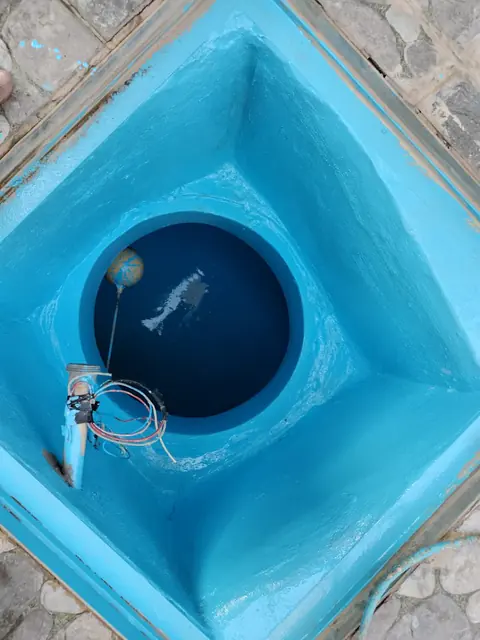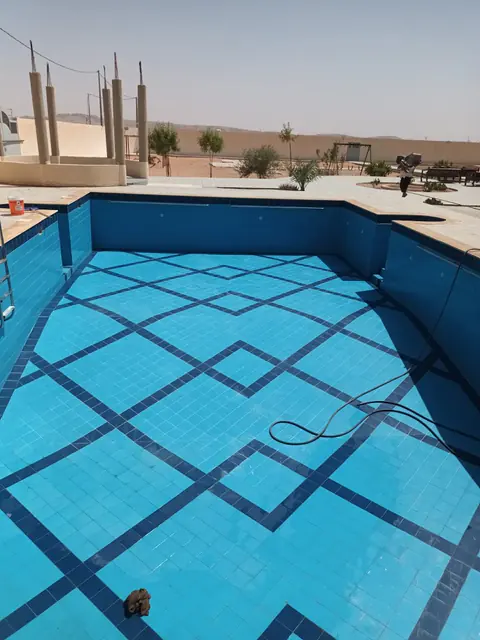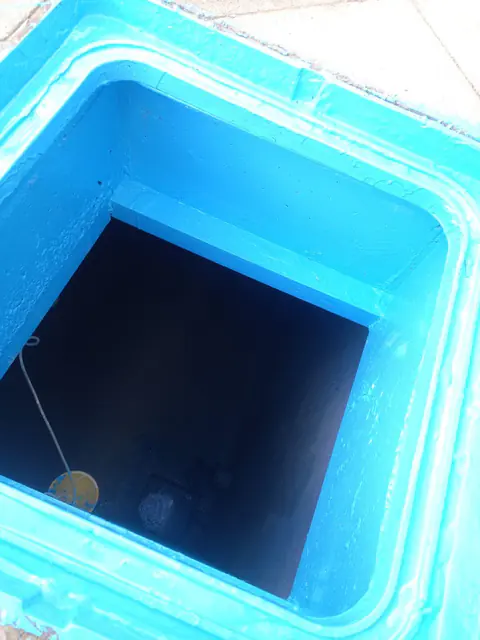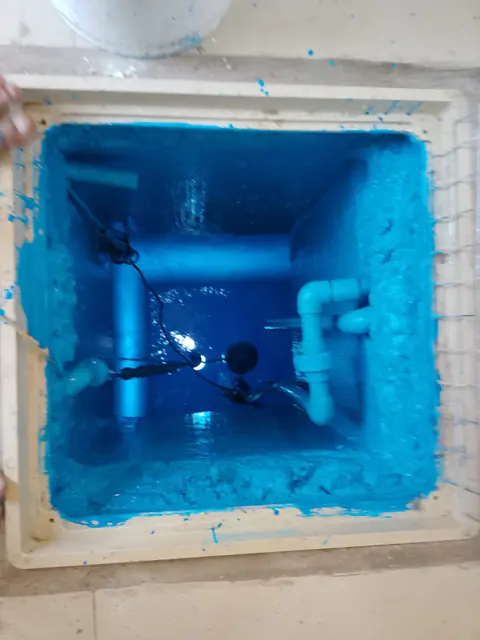
The ground tank takes in what you cannot see
A ground tank sits buried in the earth or in a building basement, and that position means it receives moisture and soil seepage through its sides and base. Algae and bacteria thrive in dark, damp spaces, and sediment can settle on the floor for a long time before any effect reaches the tap.
Call us or message us on WhatsApp, tell us your district, your tank size and what you notice in the water, and we agree a suitable time to disinfect the ground tank.
- Walls and floor
- Access and vent openings
- Inlet and outlet pipes
What does ground-tank disinfection cover?
These are the parts the disinfection covers in a ground tank, depending on its condition and what you notice in your water.
- The tank floor
Sediment and silt settle on the floor first, and disinfecting it removes the layer where dirt accumulates away from light and air.
- The internal walls
Concrete or plastic walls can develop algae or biological film, and disinfecting them stops those layers from passing into the water.
- The access opening and lid
The top opening is where air, insects and dust reach the tank, and it and its frame are disinfected because they are in direct contact with the water.
- The vent openings
Tank ventilation prevents negative pressure, but an unscreened or poorly covered vent lets contaminants in from outside, and we inspect them during the job.
- The inlet pipe
The pipe bringing water into the tank is disinfected at its entry point because sediment tends to collect around where it meets the floor of a ground tank.
- The outlet pipe
The outlet pipe carries water into the home, and we make sure the area around it inside the tank is disinfected so that affected water is not drawn straight from it.
How do we start?
Three simple steps, and we take care of the rest.
Call or message us on WhatsApp
Tell us the service you need and your district.
Tell us what you notice
Tell us what you notice in the water, which district you are in, whether the tank is concrete or plastic, and its size if you know it.
We agree a time
We settle on a time that suits you, and you stop the water supply to the tank before the visit and leave clear, safe access to it.
We start the disinfection
We disinfect the walls, floor, openings and pipes, then tell you what to keep in mind when using the water immediately after disinfection before we leave.
A service that comes to your door
- We come to youOur team arrives at your home with its equipment.
- One callCall or message us on WhatsApp and we arrange the rest.
- Cleaning and insulation with the same teamWe also handle water tank cleaning, water tank insulation and swimming pool cleaning, see the list below.
- Describe it in your own wordsA call or a WhatsApp message is enough to explain the condition of your ground tank.
One worry is how long the water will be off during disinfection. The details of the shutdown and the restart are agreed with you when you call, so you know what to expect and can prepare, and we take care of the rest.
Photos of our work



























What our customers say
very good experience with this company.
Highly Recommended for underground and above ground water tank cleanlinessالف شكر لهم نظفو لي الخزان وعملو عزل كامل والشغل على اكمل وجهه
افضل شركه تنظيف منازل وخزانات بارك الله فيكم
Questions about Ground-tank disinfection
How do I know my ground tank needs disinfecting and not just cleaning?
Cleaning removes the visible sediment, while disinfection tackles what you cannot see: bacteria and algae on the walls and floor. If you notice a smell or a change in taste after the tank was previously cleaned, or after a long break in the water supply, disinfection is the next step. We ask about the condition when you call to agree what suits your tank.
Does disinfecting a ground tank differ from an overhead tank?
Yes. A ground tank sits in the earth or in a basement, which means more surrounding moisture, less light and sometimes poorer ventilation, making its walls more prone to algae. Access to its opening and pipes also differs from an overhead tank, and we take that into account when you call and describe the location.
What do I prepare before the disinfection visit?
Stop the water supply to the tank well before the visit and clear the area around the tank lid to allow easy access. If the tank is in a basement or enclosed space, make sure it can be entered. We will go through these details with you when you call.
The water smells of chlorine after disinfection, is that normal?
Yes, that is expected right after disinfection and it clears once the water flows and the first volume is flushed through. How long that takes depends on the tank size and the building's internal network. We will tell you what to do as soon as the work is done, before we leave.
Construction work happened near my ground tank, do I need disinfection?
Nearby excavation or construction raises the chance of dust and soil reaching a ground tank through openings or imperfectly sealed walls. After any work close to the tank it is sensible to have it inspected and disinfected, especially if the work was near the lid or the inlet and outlet pipes.
Related services
Have a look at services close to this one.