An operating theatre tolerates no compromise
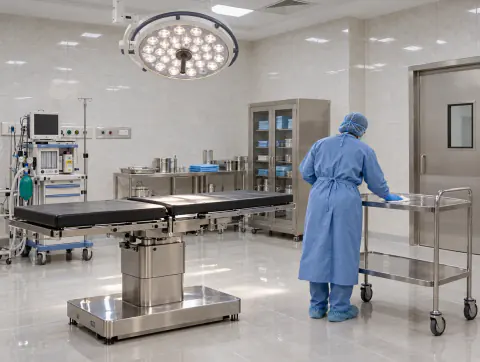
An operating theatre is a closed space with limited natural air exchange and high-contact work on hard surfaces: the steel operating table, the coated walls designed to resist absorption, and seamless floors with tight joints. Contamination is invisible, and it often settles in corners and around the overhead fittings that are easy to overlook.
Tell us the location and the district the facility is in, describe what you need, and we agree a time that fits the facility's schedule. Call us or send a WhatsApp message and we take care of the rest.
- Operating surfaces
- Lights and fittings
- Floors and joints
What does operating-theatre sanitizing cover?
These are the surfaces and zones the sanitizing goes through in the operating theatre, depending on its condition and what the facility needs.
- Operating table and frame
The steel table surfaces and the adjustable frame are sanitized, including the joints and pivot points where residue accumulates and ordinary wiping cannot reach.
- Coated and sealed walls
Theatre walls carry a non-absorbent coating that is meant to be cleaned, but spray residue settles on them and around gas and electrical outlets, and those points are part of the work.
- Floors and joints
Theatre floors are typically seamless with tight joints to prevent build-up, and sanitizing covers the surface, the joints and the floor-to-wall edge where residue collects.
- Overhead surgical lights
Surgical lights hang directly above the work area and collect residue on their arms and joints; sanitizing them requires careful access without disturbing their components.
- Theatre doors and handles
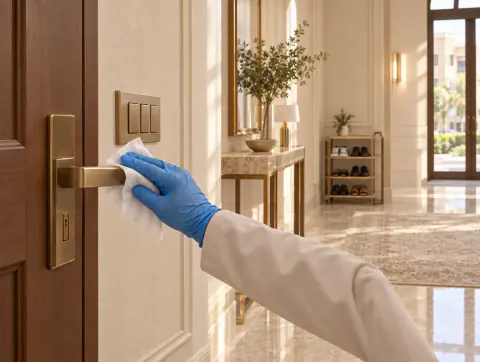
Theatre doors are high-contact and sometimes include elbow- or foot-operated panels; surfaces, handles and sealing strips are all sanitized.
- Scrub area
The scrub area adjacent to the theatre includes sinks, taps and the surrounding wall surfaces, and it is included in the sanitizing according to what the facility needs.
How do we start?
Three simple steps, and we take care of the rest.
Call or message us on WhatsApp
Tell us the service you need and your district.
Describe the theatre and what it needs
Tell us the type of theatre, whether there is more than one, its current condition, what is prompting you to request sanitizing now, and which district the facility is in.
Agree a time and prepare
We settle on a time that fits the facility's schedule, and you make sure the theatre is clear of patients and movable equipment, and sealed from the rest of the building during the work.
We work, then you check
We sanitize the surfaces, fittings, corners and floors in the right sequence, and after we finish you check that all the specified surfaces have been treated and that the theatre is ventilated before it returns to use.
A service that comes to your door
- We come to youOur team arrives at your home with its equipment.
- One callCall or message us on WhatsApp and we arrange the rest.
- Other sanitizing services from the same teamWe also handle hospital sanitizing, clinic sanitizing, school sanitizing, home sanitizing, UV sanitizing, ozone sanitizing and spray sanitizing.
- Describe what you need in your own wordsA call or a WhatsApp message is enough to explain the nature of the theatre and what you need from the sanitizing.
One worry is that the sanitizing might affect sensitive surfaces or fittings inside the operating theatre. When you call, you tell us what is in the room and what can be moved, we agree on the right approach for each surface, and then we do the work and leave the theatre ready for you to check.
Photos of our work




























What our customers say
خدمة ممتاز وسعر مناسب وشغل مية مية انصح فيهم 👍
دقة في الوقت وتنظيف سريع شكرا لكم
ثاني تجربة لي معهم ،، يعطيهم العافية
ممتازين جداً وسريعين 👍🏻
Questions about Operating-theatre sanitizing
How do I know the operating theatre needs sanitizing now?
Sanitizing an operating theatre does not wait for a visible sign. It is usually requested after a surgical procedure or diagnostic intervention, before the theatre returns to use after a period of closure, or after any incident involving potential contamination. A surface that looks clean can still carry invisible residue, and steel and non-absorbent coatings are the surfaces most exposed to this.
What should I prepare before the team arrives to sanitize the theatre?
The most useful preparation is clearing the theatre of patients, removing any movable equipment that can be temporarily relocated, and making sure the room is sealed from the rest of the building. When you call, we ask you about anything that cannot be moved so that we can plan around it.
Can the operating theatre be sanitized without closing the rest of the facility?
Yes, the sanitizing is confined to the operating theatre and any adjacent areas you specify, such as the scrub zone, and does not require the rest of the facility to close. The details are agreed when you call, depending on the layout and where the theatre sits within the building.
What affects the scope of work in operating-theatre sanitizing?
The number of theatres, the size of each one, the volume of fixed fittings inside, how accessible the corners and ceilings are, and whether the work includes the scrub area or adjacent corridors all affect the scope. You explain these when you call and we agree on what suits your situation.
What should I check after the operating-theatre sanitizing is finished?
Check that all the surfaces you asked to be sanitized have been treated, and that the theatre is sufficiently ventilated before it goes back into use. Look at the corners, the floor joints and the area around the overhead fittings, as these are the hardest to reach and the most worth verifying.
Related services
Have a look at services close to this one.