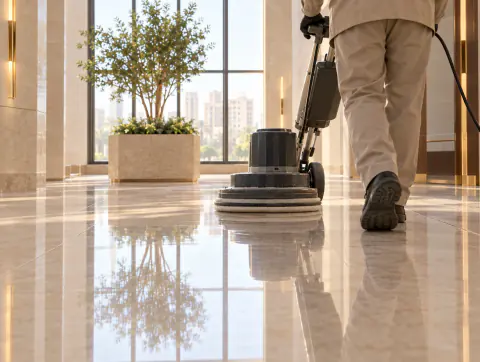
Porcelain loses its gloss from within
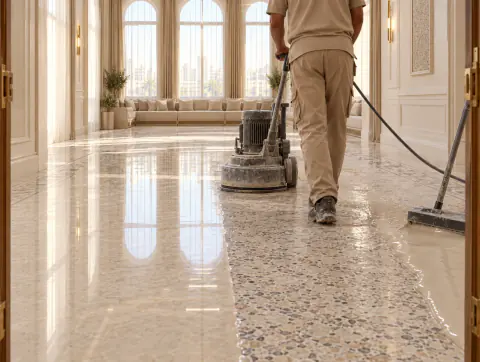
Porcelain is a dense glassy layer fired onto the tile body at high temperature, and that layer is the source of its shine. In the fine dust that settles on floors carries hard silica particles, and shoes and furniture drag them silently across the surface, scratching the glaze so it turns hazy long before you notice a visible mark.
Call or message us on WhatsApp and tell us your district and the condition of the floor, whether the dullness is general or scratches are showing in specific areas, and we will agree a time with you and take care of the rest.
- Porcelain surface
- Scratches and haze
- Floor joints
What does porcelain polishing cover?
These are the parts and stages the work goes through, depending on the condition of your floor and what you notice in it.
- Reading the surface
Before starting, the surface is checked to judge the depth of the scratches and the kind of dullness, because polished porcelain responds differently from matt or textured porcelain.
- Salt and deposit removal
Water is hard and calcium-rich, and its marks show as white patches on the surface. These deposits are removed first, because they interfere with polishing and leave an uneven result.
- Glazed layer polishing
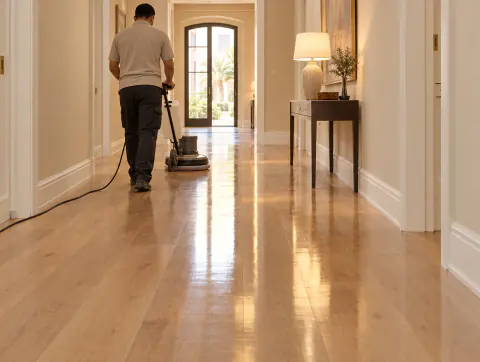
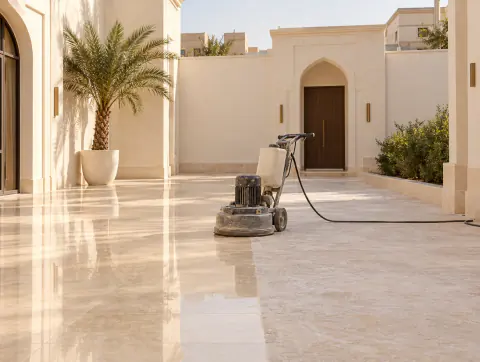
The glazed layer is polished with discs made for porcelain, working from coarser to finer grades to level fine scratches and restore an even surface that reflects light uniformly.
- High-gloss area treatment
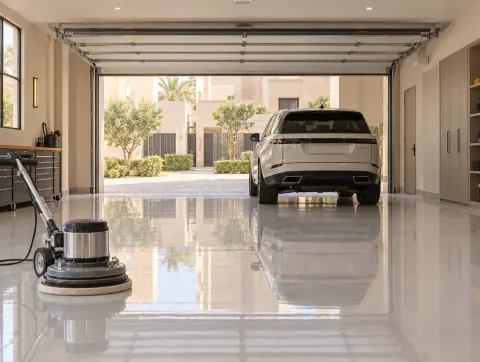
High-gloss porcelain shows scratches more than other finishes and needs a precise final buffing stage to bring back the deep shine without changing the surface texture.
- Floor joints
The joints between tiles collect dust and dirt and look dark against the rest of the floor, so cleaning them is part of completing the floor's appearance after polishing.
- Final check with you
When the work is done the lights are switched on and the surface is checked with you to confirm that the gloss is even and the haze in the areas you mentioned when you called has gone.
How do we start?
Three simple steps, and we take care of the rest.
Call or message us on WhatsApp
Tell us the service you need and your district.
Describe the floor to us
Tell us your district, the rough size of the area, the type of porcelain if you know it, and describe the dullness or scratches and where they are in the home.
We agree a time and you clear the space
We settle on a time that suits you, and you move furniture, rugs and lightweight objects off the area to be polished, leaving the floor dry before we start.
Polishing and checking together
We carry out the work from reading the surface through to final buffing, then check the floor with you under the lights to confirm the result in the areas you pointed out.
A service that comes to your door
- We come to youOur team arrives at your home with its equipment.
- One callCall or message us on WhatsApp and we arrange the rest.
- Floors and walls with one teamWe also handle mosaic polishing, parquet polishing, grout cleaning, and bathroom and kitchen cleaning.
- Describe it in your own wordsA call or a WhatsApp message is enough to explain what you notice in your porcelain floor.
One worry is that polishing might change the texture of the porcelain or make it slippery. Polished porcelain is worked to match its own glaze layer without altering the original surface texture, and you tell us the type of floor when you call so we prepare the work accordingly.
Photos of our work




























What our customers say
١٠/١٠ ما شاء الله
الله يعطيهم العافيه شغل محترف و نظيف و يعطونك نصايح تفيدك من خلال خبرتهم انصح بتجربتهم ماراح تندمون
ممتازين مره مره مره ومؤدبين
Questions about Porcelain polishing
How do I know my porcelain needs polishing and not just cleaning?
If the surface stays hazy after ordinary washing, or you see fine scratches showing in the light, or the way light reflects off the floor has changed, those are signs that the glaze layer is affected and cleaning alone will not fix it. Cleaning removes dirt from the surface; polishing restores the layer itself.
Does matt porcelain get polished the same way as glossy?
No, matt porcelain is not polished to become shiny because its texture is made that way, but deposits and stains can be removed from it and its appearance evened out. It is the polished type whose deep gloss is restored by polishing. We ask about your floor type when you call to prepare the right approach.
Do furniture scratches in porcelain disappear with polishing?
Fine surface scratches within the glaze layer are levelled by the graded polishing stages. Deep scratches that have reached the tile body become less visible but do not disappear entirely. When you call, tell us how deep the scratches are and where they are so we can judge what is achievable.
What changes the scope of the work and the price estimate for porcelain polishing?
The total area, the number of rooms or zones needed, the surface condition in terms of scratch depth and deposit build-up, and whether the porcelain is polished or matt all affect the scope. Explain these details when you call and we agree on what suits you.
Do I need to leave the room empty for a while after polishing?
It is best to let the floor dry well before moving furniture back, because dragging heavy pieces across a damp surface leaves marks. The time needed depends on the ventilation and the condition of the space, and we let you know when the work is finished.
Related services
Have a look at services close to this one.