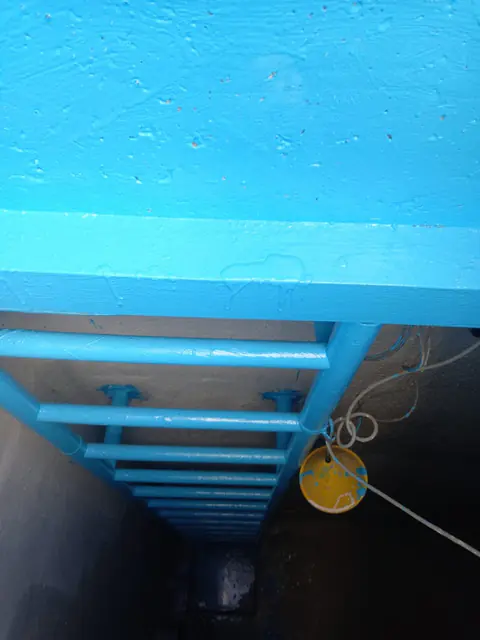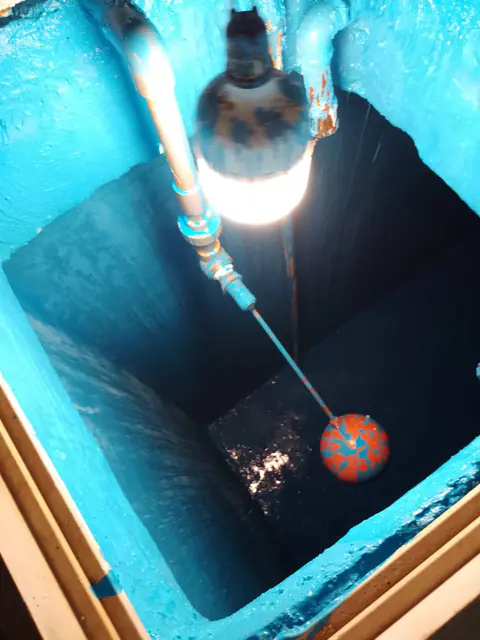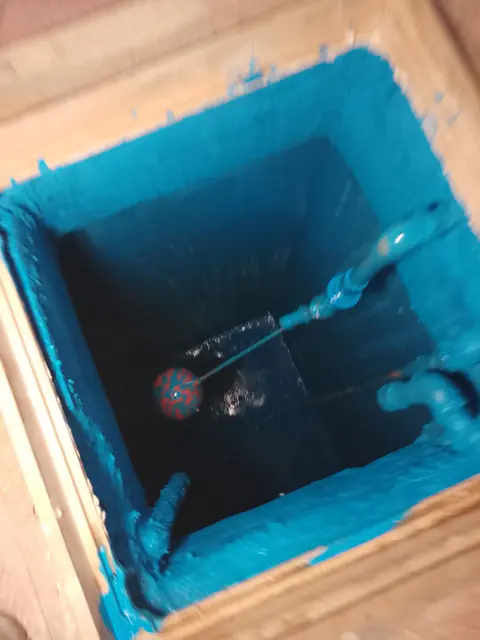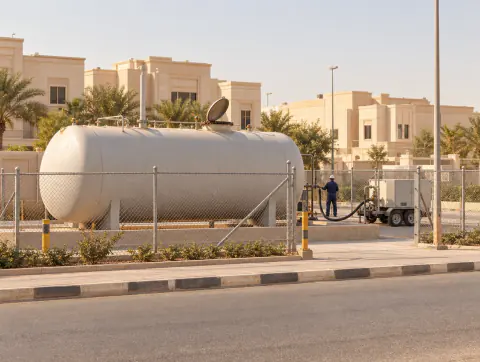
What builds up at the tank base
A fuel tank, whether steel or heavy-duty plastic, slowly collects fine particles of rust, dust and microbial growth at its base. Water enters the tank dissolved in fuel or through condensation on hot days, and because water is heavier than fuel it settles at the bottom. That standing water is where corrosion and sediment build up, and over time they affect what the tank feeds.
Call or message us on WhatsApp, tell us the type and location of your tank and your district, and we agree a time that works for you. We drain the remaining contents, clean the walls, the base and the fuel ports, and take care of the rest.
- Sediment and rust
- Standing water
- Base and walls
What does fuel-tank cleaning cover?
These are the parts the work covers in a fuel tank, depending on the tank's condition and what you notice.
- Tank base
Sediment and standing water gather at the base first, and we remove that layer entirely because it is the main source of contamination in fuel tanks.
- Internal walls
Rust forms on internal steel walls where they contact water, and we remove it before it flakes into the fuel or deepens the corrosion.
- Fuel ports and drain valves
Dirt accumulates around fuel ports and drain valves, and we inspect and clean them so fuel passes through without restriction.
- Suction pipe
The suction pipe draws fuel up to the engine or generator, and any sediment clinging to it transfers directly into the system.
- Tank lid and vent
The lid and vent are the entry points for dust and moisture in exposed tanks, and we check their condition during the clean.
- Outer area around fittings
The outer surface around fittings collects spills and dust, and we wipe it down because dirt near an opening finds its way inside.
How do we start?
Three simple steps, and we take care of the rest.
Call or message us on WhatsApp
Tell us the service you need and your district.
Tell us about your tank
Tell us the tank type and material, whether it is buried or above ground, what you have noticed, and your district.
We agree a time and you prepare
We settle on a time, and you bring the fuel level as low as possible beforehand to make draining and cleaning straightforward.
We work and you check after
We drain the remaining contents and clean the base, walls and fittings, then after we finish you check that the fuel runs clear and the odd smell is gone.
A service that comes to your door
- We come to youOur team arrives at your home with its equipment.
- One callCall or message us on WhatsApp and we arrange the rest.
- All tank services with one teamWe clean ground tanks and rooftop tanks, and we handle water-tank painting, water tank insulation, water tank disinfection and swimming pool cleaning too.
- Describe your tank in your own wordsA call or a WhatsApp message is enough to explain what you notice, and we agree the details from there.
One worry with fuel-tank cleaning is that traces of sediment will remain and pass into fresh fuel. The tank is drained of its remaining contents before the work begins, and the base and walls are cleaned before it is refilled, so old sediment does not carry over. Tell us what you notice and leave the work to us.
Photos of our work




























What our customers say
افضل شركه تنظيف منازل وخزانات بارك الله فيكم
ماشاء الله تبارك الله شغل محترف واخلاق عاليه والتزام في المواعيد الله يبارك لهم
دقة في الوقت وتنظيف سريع شكرا لكم
Questions about Fuel-tank cleaning
How do I know my fuel tank needs cleaning?
Common signs include murky fuel when you draw it off, an unusual smell from the tank, or a drop in performance from the generator or engine it feeds. If a long time has passed without cleaning, sediment may be present even with no obvious sign yet.
How does water get into a fuel tank?
Water enters by two routes. First, condensation forms on cool internal walls in the early morning and runs to the base. Second, fuel sometimes carries small amounts of dissolved water that settle out over time. In the hot summers the condensation cycle is more intense.
What do I prepare before fuel-tank cleaning?
The most important step is to run the fuel level down as low as you can before the visit. If the tank is in an enclosed space or hard to reach, tell us when you call so we can prepare for the access conditions.
Does the tank material affect how it is cleaned?
Yes. Steel tanks are more prone to rust on the internal walls, and removing it needs care to avoid scratches that speed up future corrosion. Heavy-duty plastic tanks do not rust, but they accumulate algae and fine sediment differently. That is why we ask about the material when you call.
What do I check in the fuel tank after cleaning is done?
When you run the generator or the equipment the tank feeds, open the drain valve briefly and check that the fuel runs clear. Check also that the odd smell you noticed before is gone. If anything looks different after refilling, let us know.
Related services
Have a look at services close to this one.