The old coating cracks and the water carries it to you
The internal coating of a water tank faces constant temperature swings and the weight of water that fills and empties on a regular cycle. Summer heat adds extra stress to the walls of rooftop tanks and the surfaces around them. Over time the coating cracks or flakes, and small pieces detach and float in the water or settle at the bottom, something that cleaning alone does not remove.
Tell us the type and location of your tank and what you have noticed, whether visible flaking or a change in the water after the last clean. We agree a time with you, and after the tank is emptied and its walls are cleaned, we apply a fresh internal coating suited to the tank surface and its condition. Call or message us on WhatsApp.
- Walls and floor
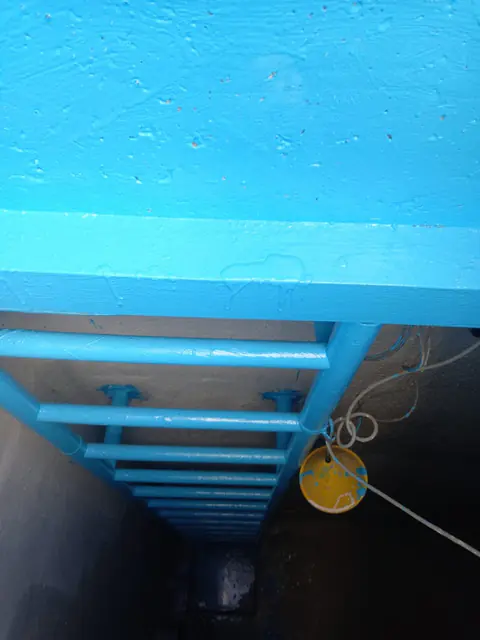
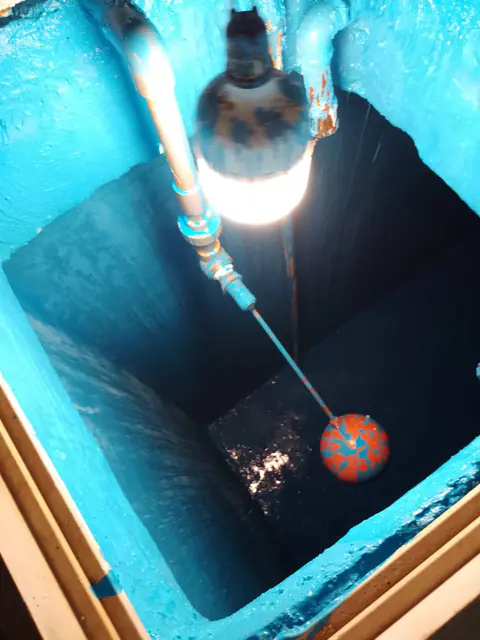
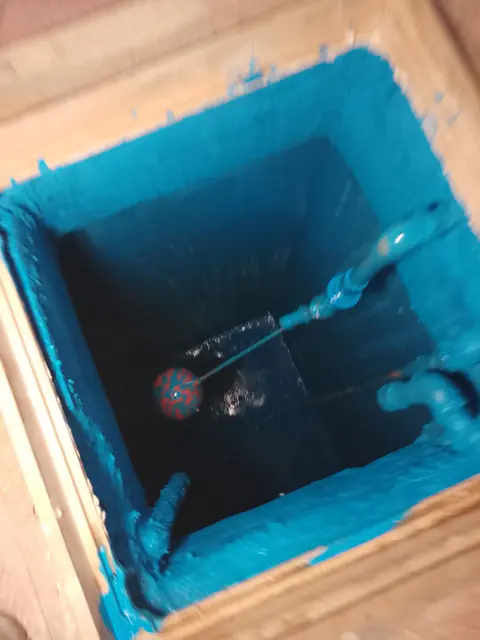
- Internal coating
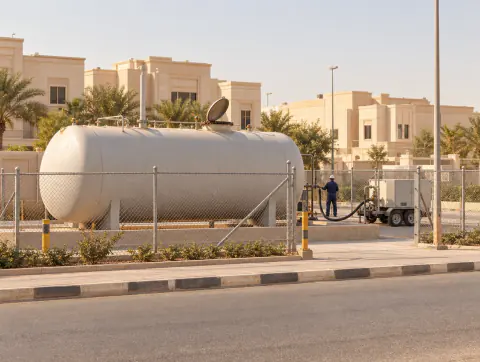
- Ground and rooftop tank
What does water-tank painting cover?
These are the parts the work goes through in your tank, depending on the condition of the existing coating, the tank type and its location.
- Inspection of the existing coating
We inspect the tank walls and floor before starting to locate cracks and flaking areas, because the nature of the damage determines what the surface needs before painting.
- Removing loose coating
We remove flaking layers and any loose areas from the walls and floor, because old coating that is not firmly bonded will prevent the new paint from adhering properly.
- Surface cleaning and preparation
We clean and dry the surface thoroughly, because paint does not bond to a wet or dirty surface, and this step is what determines how long the new layer holds.
- The base coat
We apply a base coat to the walls, floor and corners before the finishing layer; corners in particular need care because they are the points in the tank most exposed to moisture build-up.
- The finishing coat
We cover the walls, floor and corners with the finishing coat evenly; uniform coverage is what protects the surface and stops water from reaching the material beneath.
- Drying time before refilling
After finishing, the coating needs sufficient time to dry before the tank is refilled; we tell you the time needed based on the tank size and the weather conditions on the day.
How do we start?
Three simple steps, and we take care of the rest.
Call or message us on WhatsApp
Tell us the service you need and your district.
Tell us about the tank's condition
Tell us the tank type, ground or rooftop, what you notice such as flaking or a change in the water, and which district you are in, so we can agree on what suits your situation.
We agree a time and you prepare the tank
We settle on a time that suits you, and you empty the tank of water before the visit and make sure the access hatch or the ground-tank entry is clear and reachable.
We start the work and you check the result
We clean the walls, remove loose coating and apply the new layers; after drying and refilling, check the water colour and that it is free of any sediment or unusual smell.
A service that comes to your door
- We come to youOur team arrives at your home with its equipment.
- One callCall or message us on WhatsApp and we arrange the rest.
- All tank services with one teamWe also handle ground-tank cleaning, rooftop-tank cleaning, fuel-tank cleaning, water tank insulation, water tank disinfection and swimming pool cleaning.
- Describe the tank in your own wordsA call or a WhatsApp message is enough to explain what you notice in your tank or the water.
One worry many people have is refilling the tank before the coating has fully dried; water ruins paint that has not cured and the coating will not do its job. We tell you the right drying time before we leave, and you leave the rest to us.
Photos of our work



























What our customers say
افضل شركه تنظيف منازل وخزانات بارك الله فيكم
very good experience with this company.
Highly Recommended for underground and above ground water tank cleanlinessالف شكر لهم نظفو لي الخزان وعملو عزل كامل والشغل على اكمل وجهه
Questions about Water-tank painting
How do I know my tank needs painting and not just cleaning?
If you see an odd colour in the water or find white or grey sediment at the bottom after cleaning, the cause is usually flaking internal coating and not tank dirt. Equally, if you see cracks or bare patches on the tank walls when you open it, those are signs that the surface needs a new coat.
Can the tank be painted without cleaning it first?
No; paint does not bond to a dirty, wet or old-residue surface. That is why cleaning the walls, removing loose old coating and drying the surface always come before painting, and those steps are part of the job, not a separate addition.
What do I prepare before the tank-painting appointment?
Emptying the tank of water completely before the appointment is the most important thing you do. Also make sure the tank hatch or entry is clear of obstructions, and let us know in advance if reaching it involves a high roof or a narrow passage.
What do I check in the water after the tank is painted and refilled?
Check the water colour and that it is free of sediment or any change in smell. If you notice a change in the first few days it may mean the coating did not have enough drying time before refilling; let us know as soon as you notice it.
Does the tank material change how the painting is done?
Yes; concrete tanks differ from plastic and fibreglass tanks in surface texture, absorption and how well paint holds to them. That is why we ask about the tank material when you call, because the details are agreed based on the actual surface.
Related services
Have a look at services close to this one.