Holes in your clothes are moths, not age
Moths rarely show themselves, but their damage is clear: small round holes in wool, silk and natural cotton, or threads pulling loose from a carpet. It is the larva that eats the fibre, not the adult moth, and the female lays her eggs deep inside natural fibres where they are hard to spot.
Tell us what you have noticed in your clothes, furnishings or wardrobes, and which district you are in, and we agree a time to inspect the affected areas and treat them. Call or message us on WhatsApp.
- Clothes and fabrics
- Carpets and rugs
- Wardrobes and storage
What does moth control cover?
These are the areas and steps the work covers, depending on where the infestation is and what you have noticed at home.
- Wardrobe and drawer check
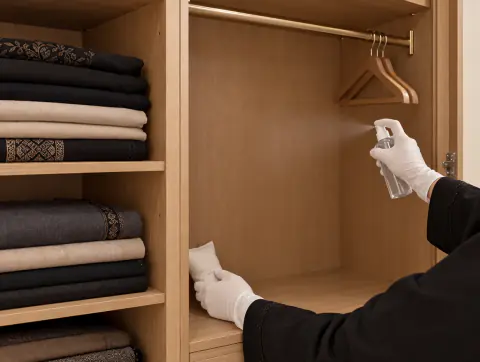
We check inside wardrobes and drawers for moth eggs, larvae and silk threads, because infestations begin in warm, enclosed spaces that are rarely opened.
- Carpets and fitted carpet
Moth activity in a carpet hides at the base of the pile, so we check the edges, corners and areas under furniture where light and foot traffic are least.
- Wool and silk garments
Animal fibres such as wool, cashmere and silk are the most vulnerable, and we identify the affected garments and treat the surrounding area inside the wardrobe.
- Upholstery and cushions
Sofas and cushions with natural filling can carry a hidden infestation, and we check the seams and covers where larvae prefer to hide.
- Seasonal storage
Garments and blankets stored unused for a long time are at highest risk, and we treat the storage bags and surrounding shelves where eggs can survive.
- Nearby cracks and corners
Moths shelter in wall cracks and corners near wardrobes, and we treat those too, because leaving them untouched allows the infestation to return.
How do we start?
Three simple steps, and we take care of the rest.
Call or message us on WhatsApp
Tell us the service you need and your district.
Describe what you notice
Tell us where you see the holes or eaten threads, whether they are in clothes, carpet or both, the type of fabric damaged, and which district you are in.
We agree a time
We settle on a time that suits you; it helps to take clothes out of wardrobes you want inspected and to keep children and pets away during treatment.
Inspection and treatment
We inspect and treat the affected areas, then guide you on what to check in the following days and how to handle the damaged garments.
A service that comes to your door
- We come to youOur team arrives at your home with its equipment.
- One callCall or message us on WhatsApp and we arrange the rest.
- The same team for other pestsWe also handle cockroaches, ants, bed bugs, termites and other pests in the same home.
- Describe it in your own wordsA call or a WhatsApp message is enough to tell us what you have noticed in your clothes or furnishings.
One worry is that treatment might damage delicate clothes or sensitive fabrics. The work targets the infected areas and the spaces around them, and any garments you want left untouched are taken out beforehand; you agree that with us when you call.
Photos of our work




























What our customers say
دقة في الوقت وتنظيف سريع شكرا لكم
شغل ممتاز وتعمل جدان ممتاز وشغل مشاء الله
نظافة و احترافية بالاداء خصوصا الفريق المصري
Questions about Moth (itha) control
How do I know the holes in my clothes are from moths and not normal wear?
Moth holes usually appear in the middle of the fabric away from seams, and concentrate on natural fibres such as wool, cashmere and silk. Normal wear starts at edges or friction points. Finding fine silk threads or tiny white debris inside the wardrobe is a clear sign of larvae.
What should I prepare before you come for moth control?
Take clothes out of the wardrobes you want inspected and set them aside, and keep children and pets away during treatment. If you have a large carpet, mention it when you call so we can prepare to check its edges and the furniture sitting on it.
Does moth affect synthetic carpet the same way as natural carpet?
No, moth larvae feed on animal fibres such as wool and silk and cannot digest synthetic fibres like nylon or polyester. Wool carpets and natural furnishings are most at risk, while synthetic carpet is largely unaffected by this pest.
What should I check after moth treatment?
In the following days check the wardrobes and carpet for any new larvae or silk threads. Damaged garments are best washed or steam-cleaned before returning them to the wardrobe. If you see new holes after a while, let us know so we can reassess.
Does storing clothes increase the risk of moths?
Yes, closed wardrobes in warm, poorly ventilated conditions are ideal for moth eggs to hatch. Where homes stay air-conditioned and sealed for long stretches, wardrobes remain warm and dry in a way that suits moths. Seasonal clothes stored without checking are most at risk.
Related services
Have a look at services close to this one.