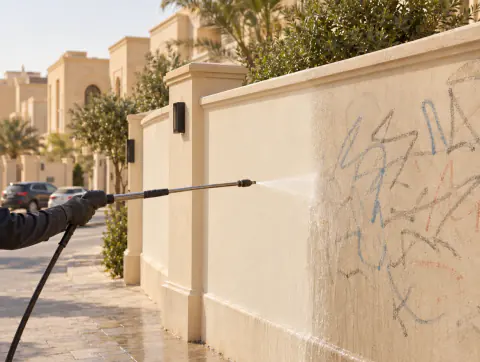
Graffiti settles into the surface, not just on it
Much graffiti is applied with spray paint, marker or wax crayon, and these materials soak into the pores of plaster, paint or concrete as soon as they dry. Scrubbing with water removes what sits on the surface but does not reach what has been absorbed, and it can spread the mark rather than clear it. That is why the treatment depends on the wall type and on what was used to draw with.
Tell us your district, whether the wall is inside or outside, and what kind of surface it has, and we agree a time that suits you. Call or message us on WhatsApp and we take care of the rest.
- Paint and plaster
- Tile and concrete
- Exterior walls
What does wall graffiti removal cover?
These are the surfaces and parts the work goes through, depending on the wall type, the nature of the graffiti and where it sits.
- Identifying the graffiti material
We begin by checking what was used on the wall, whether spray paint, marker or wax crayon, because each material responds to a different treatment and none of them is handled the same way.
- Painted and plastered walls
Washable paint responds differently from bare plaster, and the surface texture determines how deep the material has gone and which approach suits it.
- Wall tiles and ceramic
The glazed face of a tile holds graffiti on its surface rather than absorbing it, but the grout joints between tiles soak up the material quickly and need separate attention.
- Exterior walls and concrete
Outside walls are exposed to dust and heat, which bonds graffiti deeper over time, and concrete is porous so it is treated differently from painted facades.
- Edges and corners
Graffiti often runs into wall edges and corners and settles there, so we make sure those areas are treated and not just the flat visible surface.
- Any residue after removal
After the main graffiti is removed, a faint trace may remain in the pores, and we assess what is left with you and agree on the next step if the wall needs further treatment.
How do we start?
Three simple steps, and we take care of the rest.
Call or message us on WhatsApp
Tell us the service you need and your district.
Tell us about the wall
Tell us where the graffiti is, inside or outside, what type of surface it is on if you know, such as plaster, tile or concrete, and which district you are in.
We agree a time
We settle on a time that suits you, and you move any furniture or objects placed in front of the wall and leave enough space to reach it.
We work and you check afterwards
We treat the surface according to its type and the graffiti material, then we show you the wall when we finish so you can confirm the mark is gone and the surface is intact.
A service that comes to your door
- We come to youOur team arrives at your home with its equipment.
- One callCall or message us on WhatsApp and we arrange the rest.
- Your other walls and surfaces with usWe also do wall soot removal, wall mould removal, ceiling cleaning, stair washing, floors and glass.
- Describe the wall in your own wordsA call or a WhatsApp message is enough to describe the graffiti and the wall location.
One worry is that removing graffiti might damage the paint or leave a mark worse than the graffiti itself. The right treatment starts by identifying the surface type and the drawing material before anything is done, and that is what protects the wall and avoids stripping the paint. Tell us what you have and we take care of the rest.
Photos of our work




























What our customers say
ما شاء الله على شغلهم ودقه في المواعيد
الشركه اكثر من رائعه نظافه تامه وتعامل ودقه في العمل والحرص على رضا العميل. يعطونك الصور قبل وبعد للتاكد. اوصي فيهم جدا .
شغل ممتاز👍🏻
Questions about Wall graffiti removal
How do I know the graffiti on my wall needs specialist help?
If water and soap have not shifted the graffiti, or if it is on concrete, plaster or old paint, extra scrubbing risks damaging the surface. Spray paint in particular soaks into pores quickly and needs the surface treated from within, not just rubbed.
Does spray paint on plaster behave differently from marker on tile?
Yes, plaster is porous and absorbs spray paint deeply, especially in the dry heat, while a glazed tile surface mostly keeps marker on top, but the grout joints absorb it. That is why we ask about the surface type when you call.
What should I prepare before the graffiti removal appointment?
Move furniture and objects away from the wall to leave enough working space. If the graffiti is in a corridor or building entrance, make sure the area is accessible. Nothing else is needed from your side.
Will any trace remain on the wall after removal?
It depends on the surface type, how long the graffiti has been there and how deep it has gone. On concrete and old plaster a faint trace may remain in the pores even after treatment. We assess what is left with you at the end and agree whether the wall needs a further step.
Is old graffiti harder to remove than fresh graffiti?
Usually yes. The longer graffiti has been on the wall, the deeper the material has gone into the pores, with heat and dust helping to fix it there. That does not mean it cannot be removed, but it affects what the work involves, and we agree on that with you when you call and describe the wall.
Related services
Have a look at services close to this one.